
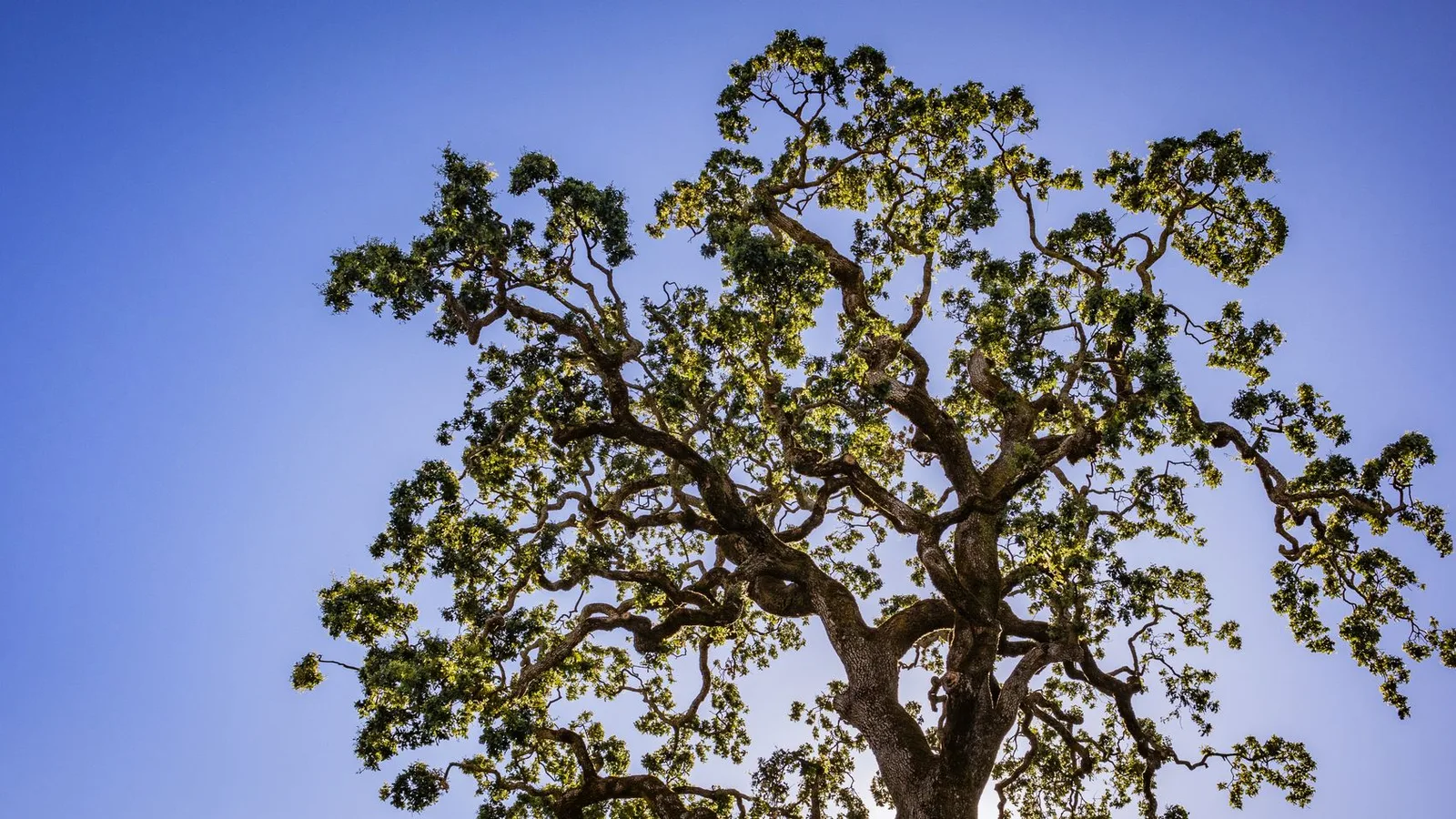
Tree crown reduction in Rochester, NY typically costs $150 to $1,800 for most residential trees, and $1,800 to $3,500 or more for very large trees or trees near power lines. Crown reduction shortens a tree’s height or spread by cutting branches back to healthy side limbs, so the tree stays safe, natural-looking and alive. It is the right answer for a healthy tree that has outgrown its space, and it is the opposite of “topping”, which cuts a tree off to stubs and damages it for good.
Quick Answer: Crown Reduction in Rochester (2026)
- What it is: reducing a tree’s height or spread by 10–25% with cuts back to living side branches
- Small tree (under 25 ft): $150 – $400
- Medium tree (25–50 ft): $400 – $900
- Large tree (50–75 ft): $900 – $1,800
- Very large or near power lines (75+ ft): $1,800 – $3,500+
- Crown thinning add-on: $150 – $600
- Best time: late fall to late winter; oaks only October–February
- Never: topping — it is cheaper today and costs you the tree later
Is Your Tree Too Big for Its Spot?
An ISA Certified arborist will tell you whether it can be safely reduced, how much, and what it will cost — free, in writing, no obligation.
ISA Certified · Fully Insured · We Never Top Trees
📞 Call (585) 479-3388Serving Rochester & all of Monroe County since 2012
What This Guide Covers
- What Crown Reduction Is (and Isn’t)
- 8 Signs a Tree Needs Crown Reduction
- Crown Reduction vs Topping
- How Much Can Be Removed?
- Crown Reduction Cost in Rochester
- What Changes the Price
- Why Rochester Trees Need It
- Which Trees Respond Well
- Best Time of Year
- How the Work Is Done
- Reduction vs Trimming, Cabling or Removal
- Areas We Serve
- Frequently Asked Questions
What Crown Reduction Is (and Isn’t)
The crown is everything above the trunk: the branches and leaves. Crown reduction makes that crown smaller — shorter, narrower, or both — by cutting each branch back to a smaller side branch (a “lateral”) that is big enough to take over as the new tip. Done well, the tree ends up looking like a slightly smaller version of itself, with no stubs and no flat top.
It is one of several types of pruning, and the terms get mixed up, so here is how they differ:
| Type of Pruning | What It Does | Use It When |
|---|---|---|
| Crown reduction | Shortens height and/or spread with cuts to living laterals | The tree is healthy but too tall, too wide, or too heavy at the ends |
| Crown thinning | Removes selected interior branches; size stays the same | The canopy is dense and catches wind, or blocks light |
| Crown raising | Removes low limbs for clearance | Branches hang over the roof, driveway or sidewalk |
| Crown cleaning / deadwooding | Removes dead, broken and diseased wood only | Every mature tree, every few years |
| Topping | Cuts leaders and limbs off to stubs at an arbitrary height | Never |
8 Signs a Tree Needs Crown Reduction
Not every big tree needs work, and a tree that is already failing may need removal instead. These are the situations where a well-planned reduction makes a tree safer and easier to live with:
Long, heavy limbs with the weight out at the tips
Over-extended branches act like levers. Shortening them back to a strong lateral takes the strain off the union where they attach.
Branches over the roof, gutters or service line
The canopy can be drawn back to a safe clearance without losing the tree, its shade or its screening.
A tree that towers over the house
A top-heavy tree planted too close to a home can be lowered to a more proportional height and a lower centre of gravity.
A dense canopy that catches the wind
A big, dense crown works like a sail in a storm and loads up with ice and snow. Reducing and thinning it lets weather pass through.
A lopsided or leaning crown
A tree leaning under a one-sided canopy can often be rebalanced by reducing the heavy side rather than taking the whole tree down.
Co-dominant stems or a weak fork
Two leaders of equal size with bark pinched between them are prone to splitting. Reducing one of them, sometimes with cabling, lowers the load on the weak joint.
Storm damage in the canopy
After a limb failure, reducing and reshaping what is left removes the hazards and helps the tree rebuild sound structure.
Heavy shade and crowding
An overgrown crown that shades out the lawn, garden or house can be reduced and thinned to bring back light and air.
Crown Reduction vs Topping
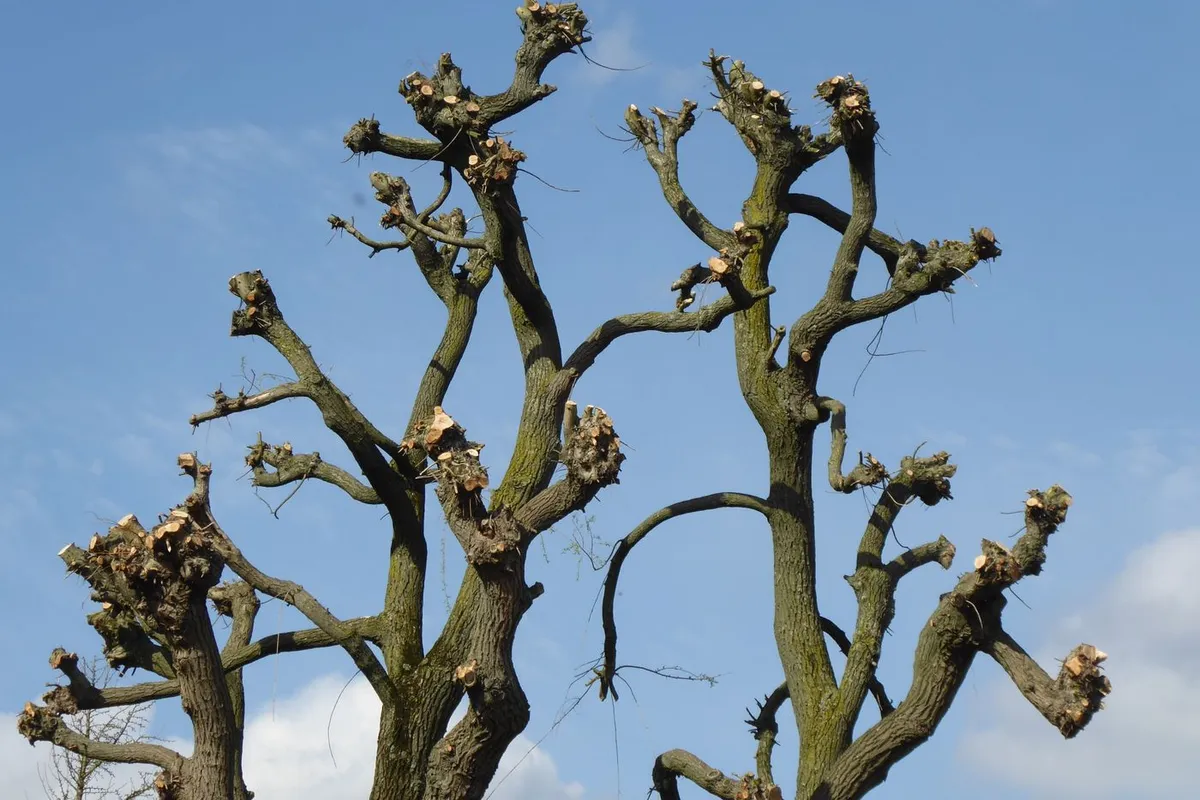
This is the most important distinction in this guide, because topping is still sold door-to-door in Rochester as a cheap way to “cut the tree down to size”. The International Society of Arboriculture calls it one of the most harmful practices in tree care.
- Each cut is made to a living lateral branch
- No more than about a quarter of the live crown removed at once
- Tree keeps its natural shape
- Wounds are small and seal over
- Buys a mature tree many more safe years
- Limbs cut off to stubs at a random height
- Removes most of the leaves at once and starves the tree
- Large wounds let decay into the main limbs
- Triggers fast, weakly attached shoots that break in storms
- Usually ends in a removal a few years later
The giveaway phrases
“We’ll top it”, “round it over”, “take the top out”, or “cut it back hard” all describe topping. A proper quote describes a reduction: a target height or clearance, and cuts back to laterals.
How Much Can Be Removed?
Less than most people expect. The ISA’s guidance on pruning mature trees is that a mature tree has far less capacity to recover from heavy pruning than a young one, so a reduction is measured in percentages, not feet:
- Around 10–25% of the live crown in a single season is the general limit for a healthy tree. A bigger change is spread over two or three visits a few years apart.
- Each cut goes back to a lateral at least a third the diameter of the branch being removed, so the lateral can take over as the new leader.
- Old, stressed or declining trees get less. A tree already fighting decay or pest damage may be a removal candidate, not a reduction candidate.
This is why a 70-foot maple cannot be made into a 40-foot maple in one afternoon. If someone promises that, they are describing topping.
Tree Crown Reduction Cost in Rochester, NY
Crown reduction is skilled climbing work on the outer canopy, so it costs more than a basic trim of the same tree. Typical 2026 ranges for Rochester and Monroe County:
| Tree Size | Common Examples | Typical Cost |
|---|---|---|
| Small — under 25 ft | Ornamentals, fruit trees, small maples | $150 – $400 |
| Medium — 25 to 50 ft | Mid-size maple, ash, birch, honeylocust | $400 – $900 |
| Large — 50 to 75 ft | Mature oak, Norway maple, elm, linden | $900 – $1,800 |
| Very large / complex — 75 ft+ or near lines | Old silver maples, cottonwood, trees over wires | $1,800 – $3,500+ |
| Crown thinning (add-on) | Done on the same visit as a reduction | $150 – $600 |
What’s included: the assessment, the pruning, chipping and hauling the brush, and raking up. Prices assume reasonable access and a tree that is structurally sound enough to climb.
Real-world price examples
Illustrative scenarios showing how the factors combine. Your own price depends on an on-site look.
| Scenario | Why It Prices There | Typical Total |
|---|---|---|
| Reducing a 20 ft crabapple crowding a walkway | Small tree, worked from the ground or a ladder | $150 – $300 |
| Pulling a 40 ft maple back off the roof | Medium tree, limbs roped down over the house | $500 – $900 |
| Lowering a 60 ft Norway maple by 15% | Large tree, full climb, many reduction cuts | $1,100 – $1,800 |
| 80 ft silver maple over the service line and garage | Very large, bucket truck, utility clearance | $2,000 – $3,200 |
| Reduction plus thinning on one 50 ft tree | Both done in the same climb | $1,100 – $2,000 |
Which Row Is Your Tree?
Send a photo or book a free visit. We’ll tell you how much can safely come off and what it will cost, in writing.
📞 Call (585) 479-3388What Changes the Price
- Height and spread. Reduction cuts are made at the outer edge of the canopy, so a taller, wider tree means more climbing, more rope work and more cuts.
- How much is coming off. A 10% tidy-up and a 25% reduction on the same tree are very different amounts of work.
- What’s under it. Limbs over a roof, fence or pool are lowered on ropes instead of dropped.
- Power lines. Work near the service line needs extra care and sometimes utility coordination. This is the usual reason a tree jumps to the top bracket.
- Access. A bucket truck beside the tree is faster than a climber in a fenced backyard where every branch is carried out by hand.
- Species and condition. Dense hardwoods are heavier to handle; decayed wood has to be worked more cautiously.
- Number of trees. Most of the cost is mobilising the crew. Several trees in one visit cost much less per tree.
Why Rochester Trees Need Crown Reduction
Three local facts make reduction more relevant here than in many places:
- Lake-effect snow, ice storms and wind. Rochester’s position on Lake Ontario brings heavy wet snow and spring ice; the National Weather Service Buffalo office, which covers Rochester, issues the warnings. A big, dense crown loads up with ice and acts as a sail. Reducing end-weight before winter is one of the best ways to storm-proof a mature tree without removing it.
- Ageing silver and Norway maples. Older neighbourhoods in the city, Brighton, Irondequoit and Greece are full of silver maples and Norway maples planted decades ago. Both grow fast, develop long heavy limbs and weak forks, and now tower over houses. A measured reduction relieves that leverage.
- Small lots. On narrow city and village lots, trees planted close to the house grow into roofs, gutters and service lines. Reduction pulls the canopy back while keeping the shade and privacy the tree provides.
Which Trees Respond Well to Crown Reduction
Reduction works because the tree redirects growth to the laterals left behind. That depends on species:
| Tree | Response | Notes |
|---|---|---|
| Maple (silver, Norway, red, sugar) | Good | Rochester’s most common candidates. Expect some vigorous regrowth to manage on later visits. |
| Oak | Good | Keep reductions modest, and prune only October–February because of oak wilt. |
| Linden, honeylocust, elm | Good | Tolerate reduction well. |
| Crabapple, cherry, serviceberry | Good | Small trees; reduce after flowering if you want the blooms. |
| Birch | Limited | Stressed easily; keep cuts small and avoid summer pruning. |
| Spruce, pine, fir | Limited | Most conifers don’t resprout from old wood, so height cannot be reduced much. Side limbs can be shortened for clearance. |
| Dead, decayed or hollow trees | No | Cannot be climbed or reduced safely. These are removal candidates. |
Best Time of Year for Crown Reduction in Rochester
Late fall through late winter is best for most trees. Without leaves the branch structure is easy to read, the brush is lighter, frozen ground protects the lawn, and insects and fungi are inactive, which the NYS Department of Environmental Conservation lists among the benefits of fall and winter pruning.
Three timing rules
Oaks: October to February only, to avoid spreading oak wilt. Maples and birches: they “bleed” sap if cut in late winter and early spring. It looks alarming but is harmless; we often schedule them for late fall or mid-winter anyway. Any tree: avoid heavy reduction during a summer drought or right as new leaves are expanding in spring, when the tree has the fewest reserves.
Exception: storm-damaged or hanging limbs come down whenever they happen. That is emergency work, not a scheduled reduction.
How a Crown Reduction Is Done
- 1Assessment. An ISA Certified arborist checks the species, structure and condition, listens to what you want (height, clearance, light), and says how much can safely come off this season.
- 2Plan and permits. We map the target height and clearance, confirm whether a permit applies (city street trees are managed by the City of Rochester Forestry Division; trees on private property usually need none), and plan access and property protection.
- 3Reduction cuts to living laterals. Working from ropes or a bucket truck, the climber shortens each leader and limb back to a lateral that can take over. No climbing spikes on a tree that is being kept.
- 4Balance and shape. The crew steps back and checks the tree from every side so it looks natural and proportional, not sheared.
- 5Cleanup. Brush is chipped and hauled, the site is raked. If you want the chips for mulch, say so and we’ll leave a pile.
Tree work is among the most hazardous trades, which is why OSHA runs a dedicated tree care safety program. Always ask for liability and workers’ compensation certificates before anyone climbs your tree.
Crown Reduction vs Trimming, Cabling or Removal
Reduction is one tool among several. The right one depends on the problem:
| Option | Best For | Typical Cost |
|---|---|---|
| Trimming & pruning | Deadwood, light shaping, clearance; size stays the same | $150 – $1,500 |
| Crown reduction | A healthy tree that is too big, too heavy at the ends, or too close | $150 – $1,800 (to $3,500+) |
| Cabling & bracing | A sound tree with a weak fork or split; often paired with a reduction | $250 – $2,500+ |
| Tree removal | Dead, decayed, hazardous, or simply the wrong tree in the wrong place | $300 – $3,500+ |
For the full picture on the other two, see our tree trimming cost guide and tree removal cost guide for Rochester.
Crown Reduction Areas We Serve
These prices apply across Rochester and Monroe County, including Brighton, Pittsford, Greece, Webster, Henrietta, Irondequoit, Penfield, Fairport, Chili, Gates, Spencerport, East Rochester, Hilton and Churchville, plus nearby Finger Lakes towns. See every area we serve.
Get Your Free Crown Reduction Estimate
An ISA Certified arborist, a written price, and a tree that still looks like a tree afterwards. Fully insured across Monroe County.
📞 Call (585) 479-3388Prefer we reach out? Request a callback
Frequently Asked Questions
How much does tree crown reduction cost in Rochester, NY?
Most residential crown reductions in Rochester cost $150 to $1,800: about $150–$400 for a small tree under 25 feet, $400–$900 for a 25–50 foot tree, and $900–$1,800 for a 50–75 foot tree. Very large trees or trees near power lines run $1,800–$3,500 or more.
What is the difference between crown reduction and topping?
Crown reduction shortens branches back to living side limbs that take over as the new tips, keeping the tree’s shape and health. Topping cuts limbs off to stubs at an arbitrary height, which starves the tree, lets decay in, and produces weak regrowth that breaks in storms.
How much can you reduce a tree’s height?
Usually about 10–25% of the live crown in one season. A larger change is spread over two or three visits a few years apart. Each cut is made to a lateral branch at least a third the diameter of the branch removed.
Can a tree be made permanently smaller?
Not permanently. A reduced tree keeps growing, so most need a lighter follow-up reduction every 3–5 years. If a tree is fundamentally too big for its spot, removal and replanting a smaller species may be the better long-term choice.
Will crown reduction harm the tree?
Done correctly, within the 25% limit and with cuts to living laterals, a healthy tree tolerates it well. Over-reducing, topping, or reducing a stressed or declining tree can harm it, which is why the assessment comes first.
When is the best time to reduce a tree’s crown?
Late fall to late winter for most trees, while they are dormant. Oaks should be pruned only from October to February to avoid spreading oak wilt. Avoid heavy pruning during a summer drought or as spring leaves are opening.
Can you reduce the height of a pine or spruce?
Only a little. Most conifers don’t resprout from old wood, so cutting the top out leaves a permanent flat top. Side limbs can be shortened for clearance, but a conifer that is too tall is usually a removal candidate.
How often does a tree need crown reduction?
Typically every 3–5 years for a fast-growing maple that has been reduced once, and less often for slower species like oak. Regular light reductions are cheaper and better for the tree than one heavy cut.
Do I need a permit for crown reduction in Rochester?
Pruning a tree on your own property generally needs no permit. Street trees in the public right-of-way are managed by the City of Rochester Forestry Division, so contact them before pruning a city tree, and check your own town’s rules in the suburbs.
Is crown reduction cheaper than removal?
Usually, yes: a reduction on a large tree typically costs $900–$1,800 while removing the same tree costs $1,200–$2,000 or more, plus stump grinding. Reduction also keeps the shade, privacy and property value the tree provides.
Are crown reduction estimates free?
Yes. Branch Specialists provides free, on-site, written estimates across Rochester and Monroe County with no obligation. Call (585) 479-3388.
Sources and Local Resources
Official and reference sources for the pruning, timing and safety points in this guide:
- International Society of Arboriculture — Pruning Mature Trees and Why Topping Hurts Trees.
- NYS DEC — “Protect Your Oaks!”: prune oaks from October to February; benefits of fall and winter pruning.
- City of Rochester — Forestry Services: street trees and tree requests.
- Cornell Cooperative Extension of Monroe County: local tree and landscape guidance.
- Penn State Extension — Pruning Landscape Trees.
- OSHA — Tree Care Industry: federal safety standards for tree work.
- US Forest Service — Urban Forests.
- National Weather Service — Buffalo office: winter storm and wind warnings for the Rochester area.
- Background: Crown (botany) (Wikidata), Pruning (Wikidata), Tree topping (Wikidata), Pollarding, Silver maple, Norway maple, Arborist, Rochester, New York (Wikidata), Monroe County, New York (Wikidata).
About these prices: the figures in this guide are typical 2026 market ranges for the Rochester, NY area and are reviewed periodically. They are estimates, not a quote. The only way to get an accurate price for your tree is a free on-site estimate.
“Good crown reduction is about restraint: take just enough to make the tree safer and better shaped, and leave it looking like a tree.”
— Branch Specialists Rochester NY, ISA Certified Arborists