
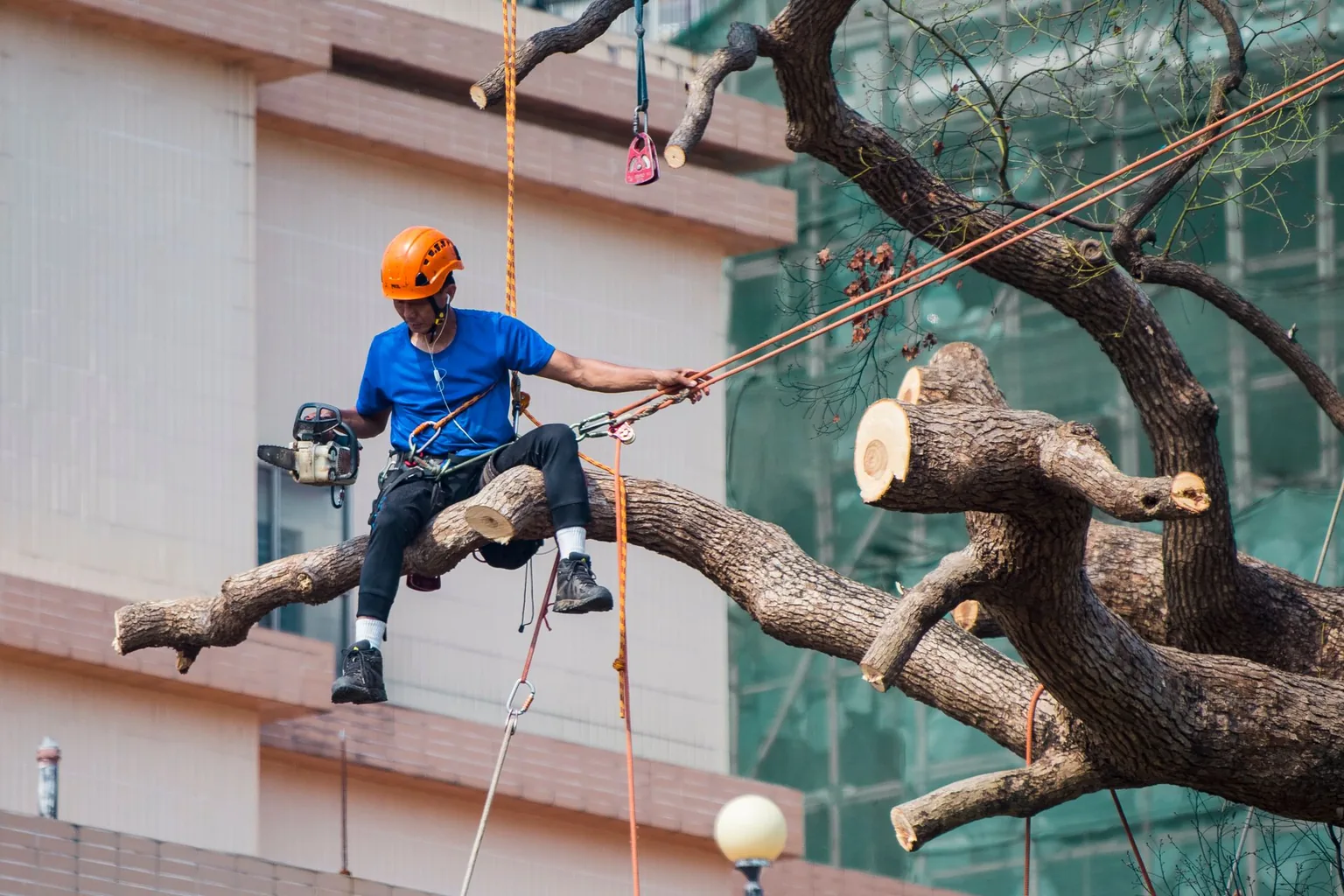
Worried About a Weak or Splitting Tree?
Free assessment from ISA Certified arborists — save the tree before it fails. Serving all of Monroe County.
ISA Certified · Fully Insured · Free Estimates
📞 Call (585) 479-3388Serving Rochester & all of Monroe County since 2012
Quick Answer
- Cabling and bracing are support systems that reinforce weak, split, or structurally stressed trees so they don’t fail.
- Cables (high up) limit how far branches can move in wind; braces (rods, lower down) reinforce weak forks and splits.
- It can save a valuable mature tree that would otherwise need removal.
- It must be installed and inspected by an ISA Certified arborist.
- For a free assessment, call Branch Specialists at (585) 479-3388.
What This Guide Covers
- What Are Cabling & Bracing?
- Cabling vs Bracing — The Difference
- Why Trees Need Support Systems
- Signs Your Tree May Need Cabling or Bracing
- Can It Really Save My Tree?
- How Installation Works
- Ongoing Inspection & Maintenance
- How Much Does It Cost in Rochester?
- Why It Must Be Done by a Pro
- Areas We Serve in Monroe County
- Frequently Asked Questions
A big, mature tree is one of the most valuable features of a property — and losing one to a storm-split trunk or a failed fork is heartbreaking and expensive. The good news: many structurally weak trees don’t have to be removed. Cabling and bracing are support systems that reinforce a vulnerable tree so it can stand safely for years to come. This guide explains how they work, when your tree needs them, and what they cost in Rochester. Worried about a specific tree? Call us at (585) 479-3388 for an assessment.
What Are Tree Cabling & Bracing?
Cabling and bracing are structural support systems installed in a tree to reduce the risk of branches or the trunk failing. They’re used on trees that are valuable but structurally weak — often large, mature trees with a flaw worth supporting rather than removing.
Instead of cutting the tree down, an arborist reinforces its weak points so it can better withstand wind, snow, ice, and its own weight. You can read more about our tree cabling & bracing service in Rochester, including what a typical installation involves.
Cabling vs Bracing — What’s the Difference?
- Flexible steel cables installed high in the canopy
- Limits how far branches sway in wind
- Reduces stress on weak branch unions
- Spreads load between limbs
- Rigid rods installed through the trunk or limbs
- Reinforces weak forks and splits directly
- Holds a cracked union together
- Often used alongside cabling for full support
In many cases the two are used together — braces reinforce the immediate weak point, while cables higher up reduce the forces that caused the problem in the first place.
Why Trees Need Support Systems
Certain structural flaws make a tree far more likely to fail — especially in Rochester’s ice and wind. Support systems address:
- Weak or “codominant” forks — where two trunks of similar size grow from one point, creating a natural weak spot prone to splitting.
- Cracks or splits in the trunk or major limbs.
- Heavy, over-extended branches that are at risk of tearing off.
- Included bark — bark trapped in a fork that weakens the union.
- Storm-damaged limbs that are worth saving with reinforcement.
Not Sure If Your Tree Can Be Saved?
Our ISA Certified arborists will assess the structure and tell you honestly whether support will work — or whether removal is safer.
📞 Call (585) 479-3388Signs Your Tree May Need Cabling or Bracing
A V-shaped double trunk
Two main stems growing from one point (codominant) are prone to splitting apart under load.
Visible cracks or a widening split
A crack in the trunk or a fork that seems to be opening is a serious warning sign.
Long, heavy horizontal limbs
Big branches extending far out can tear off at the trunk, especially when loaded with ice.
A tree you’ve already lost a limb from
If a major branch has already failed, the remaining structure may need support.
Spotting these early matters.
Structural weaknesses get worse over time and under storm load. Catching them early often means a tree can be saved with support — waiting can mean losing it, or worse, having it fail onto your property.
Can Cabling & Bracing Really Save My Tree?
Often, yes. When a tree is otherwise healthy but has a structural flaw, support systems can extend its safe life by many years — preserving a mature shade tree that would take decades to replace.
But it’s not a fix for everything. Cabling and bracing work best on healthy trees with a specific, supportable weakness. They can’t save a tree that’s extensively decayed, diseased, or dying — in those cases, removal is the safer choice. A certified arborist will tell you honestly which situation you’re in.
How Cabling & Bracing Installation Works
- 1Assessment. An ISA Certified arborist inspects the tree’s structure, health, and the specific weak point to confirm support is appropriate.
- 2System design. We determine the right combination of cables and/or braces, and where they need to be placed for maximum support.
- 3Installation. Cables are installed high in the canopy and braces through the weak union, using proper hardware and arboricultural standards.
- 4Documentation. We record the system so it can be inspected and maintained over time.
Ongoing Inspection & Maintenance
A support system isn’t “install and forget.” As the tree grows, the hardware needs periodic checks to make sure it’s still doing its job and hasn’t been outgrown or damaged.
Plan for periodic inspection
Cabling and bracing systems should be inspected regularly by an arborist — typically every year or two — to confirm the hardware is sound and the tree is still well supported. We include guidance on this with every installation.
How Much Does Cabling & Bracing Cost in Rochester?
Cost depends on the tree’s size, how many cables or braces are needed, and access. As a general guide for Rochester and Monroe County:
| System | Typical Scope | Typical Cost Range |
|---|---|---|
| Single cable | One support cable, smaller tree | $250 – $500 |
| Multi-cable system | Several cables, larger canopy | $500 – $1,200 |
| Bracing + cabling | Rods plus cables, complex tree | $1,000 – $2,500+ |
Worth the investment: compared to removing and replacing a mature tree — which can cost thousands and take decades to regrow — a support system is often the far more economical choice. We give a clear written estimate before any work.
Why Cabling & Bracing Must Be Done by a Professional
This is specialized work with real safety stakes — it’s not a job for a general contractor or a DIY kit:
- Improper placement can damage the tree or fail under load.
- The wrong hardware or tension can do more harm than good.
- A failed support system can give a false sense of security while the tree stays dangerous.
- Correct installation follows established arboricultural standards that require training.
Branch Specialists Rochester NY installs support systems the right way — ISA Certified, fully insured, and serving Monroe County since 2012.
Cabling & Bracing Areas We Serve in Monroe County
We provide tree cabling, bracing, and full tree care across Rochester and the surrounding Monroe County communities, including Rochester, Pittsford, Greece, Webster, Brighton, Henrietta, Irondequoit, Penfield, Fairport, Spencerport, East Rochester, Chili, Gates, Hilton, and Churchville. See every area we serve.
Think Your Tree Might Be Saved?
Get a free structural assessment. ISA Certified & fully insured across Monroe County.
📞 Call (585) 479-3388Prefer we reach out? Request a callback
Frequently Asked Questions
What is the difference between tree cabling and bracing?
Cabling uses flexible steel cables installed high in the canopy to limit how far branches sway and spread the load between limbs. Bracing uses rigid rods installed through the trunk or a weak fork to reinforce it directly. They’re often used together for full support.
Can cabling and bracing save a tree that would otherwise be removed?
Often, yes — if the tree is otherwise healthy but has a specific structural weakness like a split fork or a heavy limb. It can add many safe years to a mature tree. It won’t save a tree that’s extensively decayed or dying, where removal is safer.
How much does tree cabling and bracing cost in Rochester?
A single cable typically runs $250–$500, a multi-cable system $500–$1,200, and a combined bracing-plus-cabling system $1,000–$2,500+, depending on tree size and complexity. We provide a written estimate before starting.
How long do support systems last?
Properly installed hardware can last many years, but the system should be inspected every year or two as the tree grows to confirm it’s still sound and effective.
Do the cables damage the tree?
Installed correctly by a certified arborist using proper hardware, no — the system supports the tree without harming its health. Improper installation is what causes damage, which is why this is professional work.
Is this a DIY job?
No. Placement, hardware, and tension all require training and follow arboricultural standards. A poorly installed system can fail under load and give a false sense of safety while the tree stays dangerous.
“A support system can buy a beautiful old tree decades of safe life. But it has to be the right tree and the right install — that’s a judgment call only a trained arborist should make.”
— Branch Specialists Rochester NY, ISA Certified Arborists