
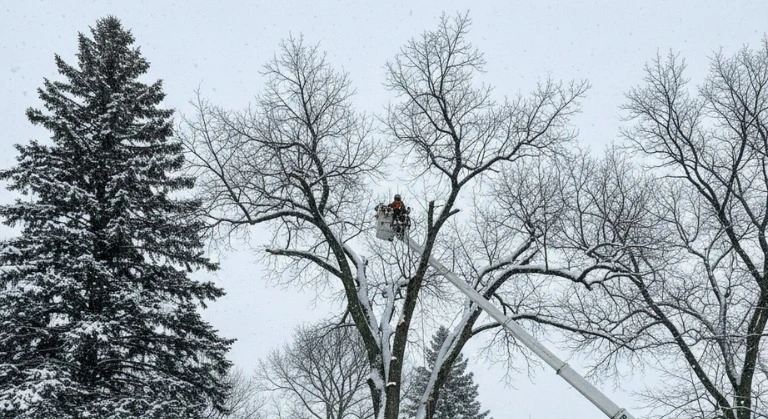
Rochester winters not only test people but also put trees under pressure tests. Lake-effect snow, ice, abrupt changes in temperature, and high winds all contribute to the tree stresses, such as loosening of branches and the destabilization of root systems. So, unless fully prepared, these trees can become an ultimate headache.
This guide by Branch Specialists Rochester puts an emphasis on the approach of tree service in Rochester, which focuses on practicality. Here are some easy-to-follow winter tree care tips that will enable homeowners minimize risks, preserve property, and ensure long-term tree health.
Expert Tips for Winter Storm Tree Prep
Start Tree Preparation Before the First Freeze
Preparations of trees ought to be made long before winter weather sets in. Taking early action enhances visibility and access to trees, hence easily detecting problems that may escalate when the winter season arrives, particularly trees close to homes, driveways, or utility lines.
Winter tree damage prevention includes a major part that is taking action in the fall. possible. An early start prevents the need for emergency services in case of severe winter storms.
Understanding the Snow and Ice Effect on Tree Limbs
Several homeowners pose a question: Can snow and ice break tree branches? Yes is the answer even to healthy trees. The presence of ice adds a lot of weight to the branches, and the undetectable rot causes a decrease in structural integrity. Together with wind, these reasons result in the sudden breakage.
Perform a Detailed Pre-Winter Tree Inspection
An in-depth cold-weather tree health inspection can be used to reveal some of the latent weaknesses not evident in winter. Snow and ice loads on trunks, dead branches, and leaning trees are also likely to increase dangers once snowfall starts. Pre-season checks will aid in planning winters better and safer.
Inspections typically include:
1. Identify Hazardous Limbs Before Ice Storms
Ice storms have proven to be one of the major causes of winter-based failures in trees in the area. Ice provides a lot of weight to the branches, which are prone to breaking. Identifying these hazardous limbs before ice storms is one way of minimizing this risk. Branches with poor attachment angles, too long, or previously damaged should be removed.
This is a crucial step of mitigation that should be taken to minimize damage to property during freezing rain.
2. Watch for Signs of Brittle Tree Branches
The cold weather may make the branches brittle, especially in older trees or any other species that have weaker wood. During the winter season, the brittle tree branches can be noted by the cracking, bark flakes, or snapping sounds.
Early management by identifying these warning signs will prevent sudden breakages and minimize the possibility of ice causing damage to trees during a long period of cold weather.
3. Identifying Which Trees Are Most Vulnerable in Winter
Winter stress does not equally affect all trees. Knowing what trees are most susceptible to winter harm enables homeowners concentrate on what is most necessary. Weaker wood structure and high growth rates are extreme factors that predispose the tree species like silver maple, Willow, and Bradford pear to failure.
4. Use Dormant Season Pruning to Strengthen Trees
Dormant pruning is a good way of enhancing the structure of trees prior to winter stress. In their state of dormancy, trees are less susceptible to diseases and have a greater recuperation rate of cuts caused by pruning.
The benefits associated with dormant pruning of trees are an enhanced balance in the canopy and lowered wind resistance that increases structural integrity during heavy snowfall. Strategic pruning helps trees to be strengthened without overworking.
5. Protect Root Zones Before the Ground Freezes
The stability of winter trees requires healthy roots. There should be measures taken to safeguard the root zone before the ground freezes. The use of mulch will also ensure a regularity in the temperature of the soil, and adequate drainage will minimize the danger of root destruction.
6. Prepare for Emergency Winter Storm Situations
Severe storms can still be devastating even when preparations have been made. Emergency winter storm tree prep is concerned with preparedness and not just response.
Being aware of the most dangerous trees, maintaining clear access areas, and noting the pre-winter conditions can assist homeowners in reacting in a safe manner. This planning also explains when to call in an emergency tree help following a storm.
7. Focus on Structural Stability, Not Just Appearance
Preparation before winter should focus on the structure and not the appearance of the tree. To withstand winter stress, we need to strike a balance between canopy weight and branch attachments, as well as stable root systems. The strategy enhances strength when there is a lot of snow and minimizes the impact in the long run.
Reduce Snow and Ice Accumulation Safely
Snow is not necessarily harmful, but wet snow and ice can create excessive weight on the branches. Safe snow management plays a significant role in protecting trees from snow and ice. Snow can be removed by brushing the branches (that can be reached). It is best not to shake or strike the frozen branches, as this can do more harm than good.
Avoid Common Winter Tree Care Mistakes
Winter damage can also be increased unintentionally by certain actions. When it is very cold, when de-icers that contain salt are applied around the trees, or when people are trying to remove big branches on their own, they only cause more damage.
Minimizing these errors decreases the damage to trees in the winter season in Rochester and also contributes to the stability of trees during winter.
Monitor Trees After Every Major Storm
Damage in winter is not that obvious. Trees need to be patrolled following significant snowfalls/ice storms to determine the presence of new cracks, hanging limbs, or leaning trunks. Periodic post-storm inspections complement the continued tree service prep Rochester allow one to avoid delayed failures that may be hazardous.
Plan Long-Term Tree Care for Future Winters
Annual checkups, periodic trimming, and checking aging contribute to the decreased cumulative stress with time. These are long-term plans that enhance the health of trees and decrease the number of emergencies annually.
Rely on Local Knowledge for Winter Tree Planning
Local tree service in Rochester ny, such as Branch Specialists, knows the impact of the weather patterns of Rochester on trees and uses this information in seasonal planning. The experience they have in their region affirms the practicality of planning ahead and safer grounds during winter.
Conclusion
Withstanding cruel winters means you require a tree care plan that is carefully designed with the help of a tree service Rochester ny , like Branch Specialists.
Winter tree maintenance tips like those above allow people to stop the risks of tree failures, increase the integrity and health for a long time.
FAQs
Q1:What is the right time to inspect trees prior to winter?
It is best to do it in late fall when snow and ice have not been able to interfere with visibility and access.
Q2:Can I get winter tree damage prevention service in Rochester from Branch Specialists?
Of course, give a call or send a message to schedule a consultation.
Q3:Do old trees have a higher susceptibility to winter storms?
Yes, old age contributes to branch and trunk failure.