
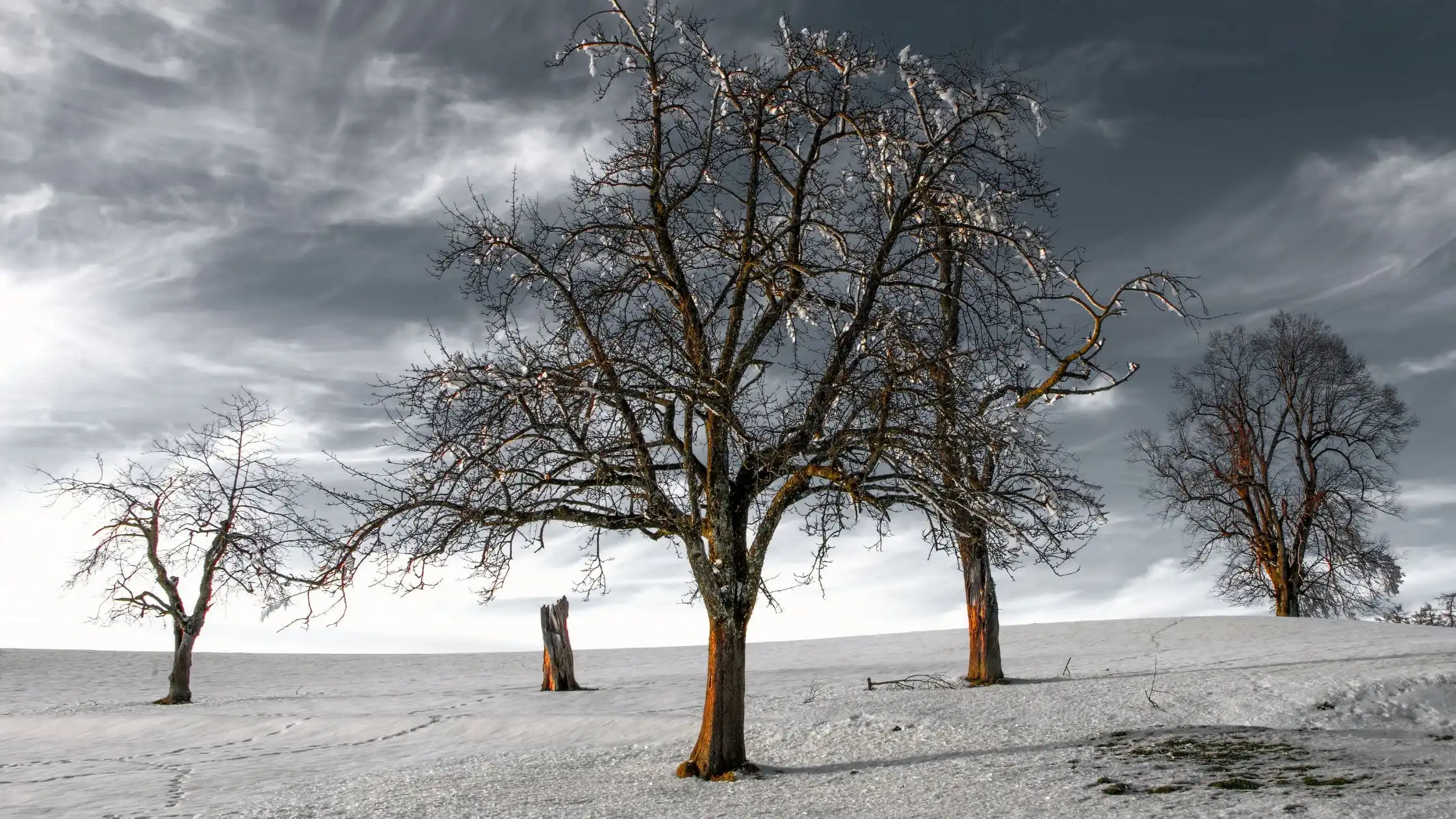
Snow-covered trees may look beautiful plus sturdy, but the hidden story comes with snowstorms that are different. Trees pose severe and underestimated dangers when they are in poor condition or damaged.
The snowstorm tree damage is among the most frequent winter-related threats to residential and commercial premises in Rochester. Weaknesses in trees may collapse without prior notice, resulting in destruction of property, injuries, and loss of power.
Knowing the whole types of dangers aids in identifying weak trees during snowstorms, which is vital for winter safety.
Let’s identify these tree risks with Branch Specialist Rochester!
The Risk of Sudden Tree Collapse During Snowstorms
Among the most hazardous consequences of winter storm tree risks is sudden tree collapse.
The snow collects rapidly on the branches, and it adds much weight, which is way beyond what the weakened wood can hold. Internal decay of trees, bad structure, and damage to roots are particularly susceptible.
In Rochester, lake-effect snow is deep and dense such that tree failure is more probable even in minor snowfall. The collapse can occur suddenly without notice to the people around, and it is a very severe threat.
Falling Branches as a Major Winter Hazard
The most common types of snowstorm tree damage include large falling limbs. Poor attachment of the branches and deadwoods, which are unable to support the weight of the breaking.
Such falling trees may destroy roofs, cars, fences, and other outdoor buildings. In most of the Rochester neighborhoods, trees that have grown near houses and sidewalks pose more risks.
The risks of falling trees in winter are especially hazardous due to the fact that they may happen after a storm, at a time when people think that everything is all right.
Damage to Homes and Buildings
Snowstorms often lead to direct structural damage to buildings due to weak trees. Large branches or complete trees may fall on top of the roofs, siding, windows, and chimneys. The damage caused by snow load on trees usually creates punctures in the roof, destruction of the gutter, and water leakage, which intensifies as the snow melts.
In extreme situations, houses are rendered temporarily inhabitable. These dangers are also increased when the compromised trees in winter are near buildings, and they have not been adequately maintained.
Threats to Power Lines and Utilities
The other severe threat linked to winter storm tree risks is the interference with power and utility lines. Branches with snow on them may drop over lines and result in outages or fire. During snowstorms, utility poles are uprooted and pulled down by entire trees.
The problem of power outages in winter in Rochester is normally attributed to the failures of trees in snowstorms, which pose a safety risk to houses that use heating systems in freezing conditions.
Roadway and Sidewalk Hazards
Snowstorms also present severe threats to the general community when there are weak trees. Branches and uprooted trees may obstruct roads, driveways, and sidewalks. These barriers enhance the risk of traffic accidents and injuries to pedestrians.
The damage caused by snow is also not very visible, which means that winter tree hazards are more dangerous in low-visibility conditions. Snowstorm response is a common practice by municipal crews that addresses damage to trees that block emergency response routes.
Root Failure and Ground Instability
Snowstorms do not have an impact on branches only. Recurrent snowing, together with frozen or waterlogged soil, undermines root systems. The soil movements decrease the root stability when snow melts and refreezes.
This is how snowstorms weaken trees in the long run. Trees can be seen as upright, yet anchoring is compromised, hence they are prone to uprooting or tipping over. Root failure is the major cause of tree failure during the snowstorms in Rochester.
Increased Risk After the Storm Has Passed
Homeowners who believe that danger is over, after the snowfall has ceased, actually find that the risks of winter storm trees are usually greater at that point. Snow melting further loads the weight, and the branches that have been weakened might give in at last.
Signs a tree is dangerous after snow are new leaning trunks, cracks in the bark, or branches that have fallen on pressing buildings. The commonly damaged trees are a result of delayed snowstorms, which are not used to it until they fail.
Impact on Vehicles and Personal Safety
Weak trees are common culprits of parked vehicles in cases of snowstorms. The falling branches have the potential of breaking windows and roofs that would be expensive to fix.
Better still, a major concern is the issue of personal injury. Walking under snowy trees exposes one to more winter tree hazards. At home, these risks spread to children and pets doing outdoor activities after the storms.
How to Identify Weak Trees That Pose Immediate Danger
How to identify weak trees? It can be used to minimize winter risk. Trees that have noticeable cracks, dead limbs, and hollow trunks or fungal plants are more likely to fail. Snowstorms should be regarded as high-risk in the leaning trees or the trees with bare roots.
Older trees and trees already damaged by wind or insects are some of the common sources of snowstorm tree damage in Rochester.
Long-Term Structural Damage to Trees
Snowstorms may weaken trees forever, though the trees do not fall. Flexibility due to repeated loading of snow increases microfractures in wood fibers.
This damage is hidden over a number of winters, which shows how a snowstorm can structurally damage trees. With each storm, these compromised trees are more dangerous than the last, bringing about continuous winter threats to trees as long as they are not addressed.
Fire and Emergency Response Risks
The snowstorms may delay the emergency services because of blocked roads and fallen power lines as a result of trees falling. Ambulances and fire trucks might not be able to reach the affected regions, which puts them at greater danger during medical or fire accidents.
This secondary threat explains why the treatment of trees that have been damaged during the winter season is a matter of national safety and not a personal property matter.
Preventive Tree Care to Reduce Winter Dangers
The preventive tree care in Rochester aimed at preventing the risks even prior to the snowstorms. Proper pruning would also minimize the amount of snow and canopy weight.
The solution to decay, loss of deadwood, and enhanced root health reduces the risk of snowstorm tree damage substantially. Professionals check weak trees during snowstorms so you can have peace of mind, as the threat is already addressed.
Why Professional Tree Services Matter in Rochester Winters
Tree services in Rochester have qualified experts who know the weather patterns and the vulnerability of tree species. Branch Specialists Rochester assists property owners in finding hazards, minimizing winter risks, and keeping the landscapes safer. They have the knowledge of the tree hazards in winter, which makes them handle trees in a responsible way during the season.
Conclusion
Snowstorms in Rochester generate several levels of hazard in instances when the trees are feeble or abandoned. Snowstorm tree damage is a significant danger to safety and property, whether it is falling branches and uprooted trees, power outages, blocked roads, etc.
The knowledge of all the categories of risks posed by weak trees during snowstorms, the ability to identify warning signs, and the expenditure on preventive measures are the major steps to winter preparedness.
The proactive response with a professional like Branch Specialists Rochester will decrease the number of accidents and damages, and safeguard Rochester homes and communities during rough winter seasons.
FAQs
Q1:Can weak trees fall during snowstorms?
Yes, even on calm days, snowstorms may lead to the fall of trees caused by the weight of snow alone.
Q2:Which trees are the most dangerous following a snowstorm?
The usual tree hazards in winter include trees with cracks, heavy leaning, and broken branches.
Q3:What is the expected time for inspecting trees after the snow?
The inspections should be done immediately after the storms to identify when a tree is dangerous.